
JOURNAL / FIELD NOTES
Framer now covers most technical SEO foundations. Whether your site ranks still depends more on structure, content and whether you have something worth finding.
Konstantin Nikolaev
Leipzig, Germany
5 min read

Yes. Framer is good for SEO. The bigger question is whether your website is.
For a long time, Framer had a strange reputation. Designers loved it because they could build visually ambitious websites without turning every animation into a development project. SEO people were more sceptical. WordPress had thousands of plugins, Webflow had already established itself as a professional website builder, and Framer was still seen by many as the tool for beautiful portfolio sites.
That argument is getting harder to make in 2026. Framer now handles most of the technical SEO foundations a normal business website needs automatically. But that does not mean publishing a Framer site suddenly makes it rank. The platform can create the right foundation. It cannot make an uninteresting website worth finding.
What Framer already gets right
A modern Framer website automatically gets a sitemap and robots.txt file, while page titles, descriptions, canonical URLs, redirects, semantic HTML and structured data can all be controlled inside the platform. Pages are also pre-rendered to HTML, which means search crawlers can access the actual content without relying on JavaScript to build the page first. Framer handles much of the less exciting technical work that website owners used to need plugins or developers for.

PERFORMANCE — Automatic image optimization cuts page weight without turning speed into a separate production task. Source: Framer.
Performance is also much less of an argument against Framer than it used to be. Images are automatically optimized, content can be lazy-loaded and published sites are distributed through Framer’s infrastructure. Framer has also introduced traffic-aware pre-rendering, which prioritizes frequently visited pages while still serving optimized versions to crawlers.
None of this is particularly sexy. And that is exactly the point. Technical SEO should mostly disappear into the background. A website builder should give you clean foundations so you can spend more time thinking about what people actually came to the website for.
Framer takes care of | Still on you |
|---|---|
Sitemap and robots.txt | Service pages substantial enough to stand on their own |
Pre-rendered HTML that crawlers can read | Case studies that explain the problem, thinking and outcome |
Image optimization and lazy loading | Page titles that match real search intent |
Controls for titles, descriptions, canonicals, redirects and structured data | Answers to the questions customers already ask |
The problem usually isn’t Framer
If a Framer website does not rank, the answer is rarely simply: because it was built in Framer.
More often, the website has five pages that barely say anything. The homepage tries to rank for ten different services. Every project is presented through beautiful images but almost no written context. Service pages do not exist. Page titles are generic. Nobody has thought about search intent. And the entire website contains less useful information than one decent competitor article.
That is not a Framer problem. That is a content and structure problem.
A visually impressive website can actually be surprisingly invisible to Google if all of its meaning exists inside images, videos and clever interactions. Search engines still need to understand what you do, who you do it for and why a specific page deserves to appear for a specific search.
Good SEO therefore begins much earlier than the SEO settings panel. It begins with the architecture of the website. If you offer Brand Design, Web Design and Brand Strategy, those services should probably have pages substantial enough to stand on their own. If you have completed interesting projects, your case studies should explain the problem, thinking and outcome instead of behaving like image galleries. And if customers repeatedly ask the same questions before hiring you, those questions are probably good content opportunities.
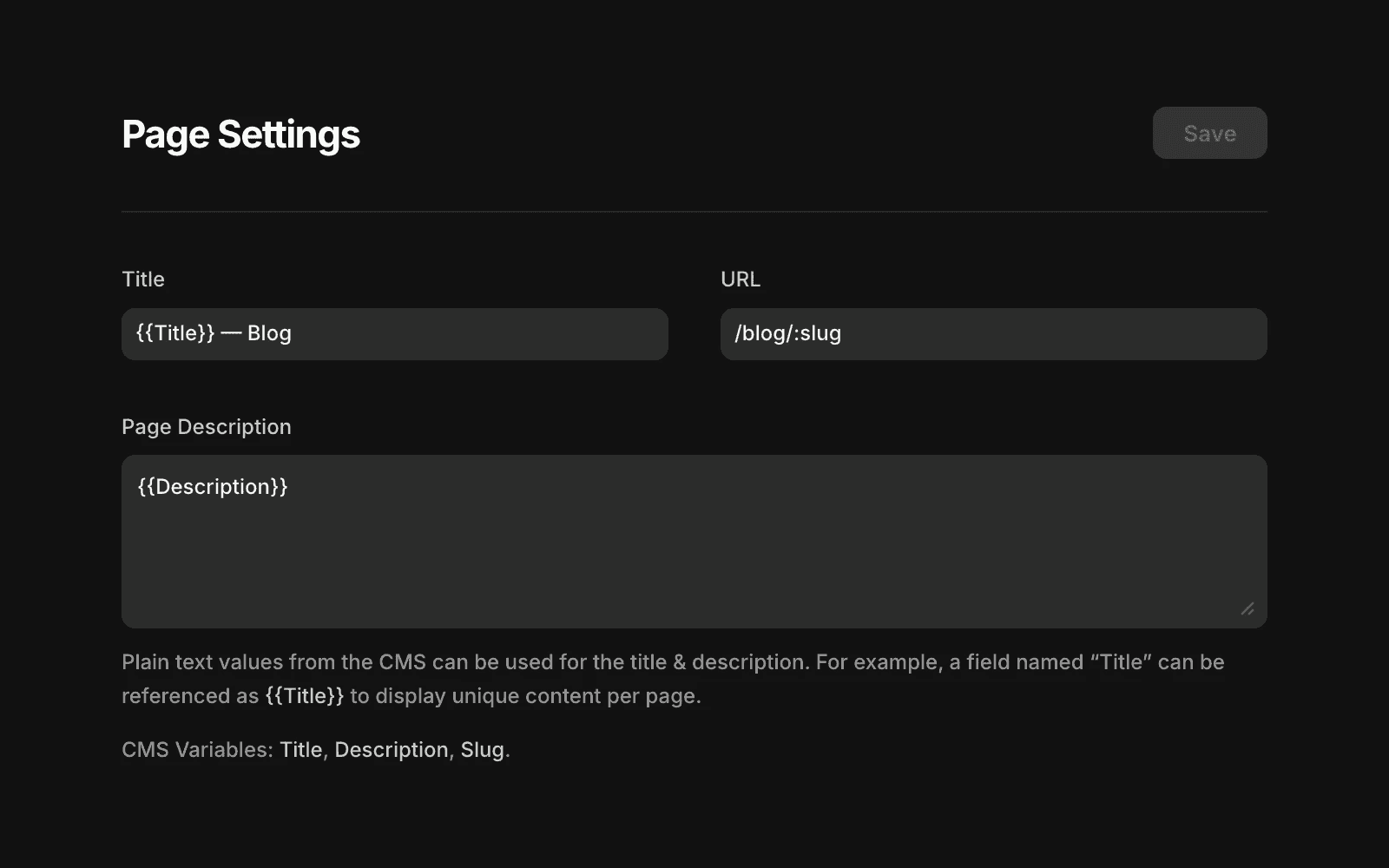
CMS METADATA — Dynamic titles and descriptions are controllable, but the content still has to earn the click. Source: Framer Help.
What about AI search and AEO?
This is where things become more interesting in 2026. Websites are no longer being discovered exclusively through a traditional list of blue Google links. AI Overviews, AI Mode and AI assistants increasingly extract, summarize and cite information from websites.
Framer has started adapting to this directly. Its pages can be served in structured formats that AI agents can read, and Framer now even offers an AEO scanner designed to evaluate whether content can be found, understood and cited by AI systems.
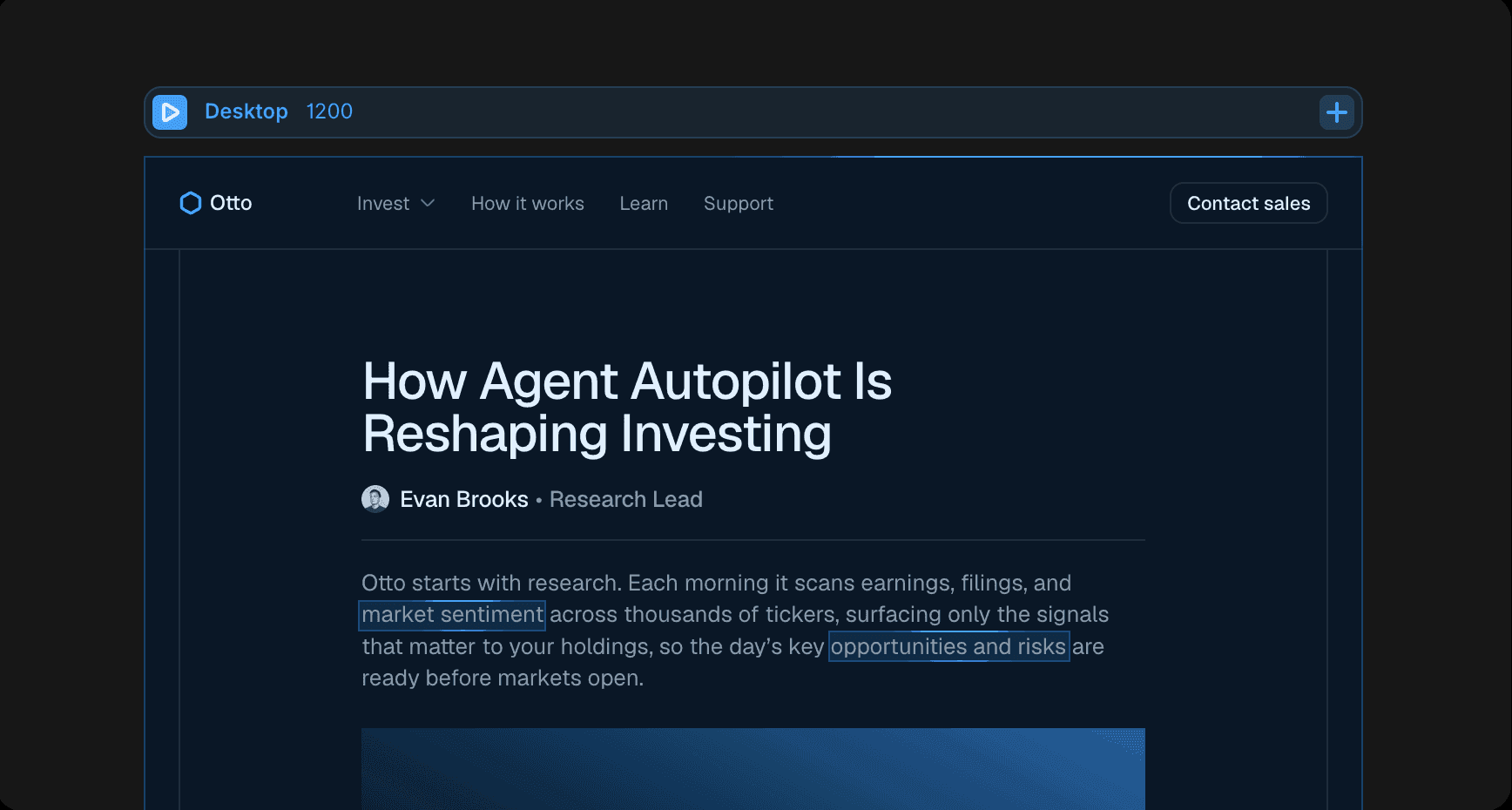
INTERNAL LINKS — Clear links help people, crawlers and AI systems discover the relationships between pages. Source: Framer.
But again, there is no magic switch.
Google’s own guidance for generative search is remarkably unexciting: the fundamentals of SEO still matter. Crawlable pages, clear structure, useful content and information that adds something original remain important. Google has explicitly pushed back against the idea that websites suddenly need an entirely separate technical discipline just to appear inside AI results.
That might actually be good news. You do not need to redesign your entire website for robots. You need to make it easier for both humans and machines to understand what you know.
So, should you use Framer if SEO matters?
For most brand websites, portfolios, agencies, restaurants, startups and service businesses: yes.
I would not choose Framer because it has some secret SEO advantage over every other platform. It does not. I would choose it because it gives you a strong technical foundation without heavily restricting the design, which means SEO does not have to come at the cost of creating an interesting website.
WordPress can rank. Webflow can rank. Framer can rank. A custom-coded website can rank.
The platform is rarely the deciding factor.
What matters much more is whether your site deserves to be found in the first place.
Does every important service have a useful page?
Do your case studies contain actual insight?
Do you answer questions potential customers are already searching for?
Does your website communicate expertise beyond saying that you are an expert?
Is there anything on your site that a hundred competitors could not have written?
Framer can take care of a lot of the technical groundwork.
“
The bottom line
The part it cannot automate is having something worth saying.

Written by
Konstantin Nikolaev
Brand & Web Designer
Brand & web designer based in Leipzig and Halle (Saale), and an Official Framer Expert. I build brand identities and websites that work as one system.
WRITTEN FROM
Leipzig, Germany


