
JOURNAL / FIELD NOTES
Professional websites in Germany can cost €2,000 or €20,000. The difference is rarely page count. It is strategy, scope, design and execution.
Konstantin Nikolaev
Leipzig, Germany
5 min read

A professional website in Germany can cost €2,000. It can also cost €20,000. And strangely enough, both prices can be completely reasonable.
That is what makes the question “How much does a website cost?” so frustrating. A five-page website can be built from a template in a few days or designed completely from scratch over several weeks. From the outside, both are technically five-page websites. What you are actually buying, however, can be fundamentally different.
So instead of pretending there is one correct price, it makes more sense to understand what you are paying for.
What does a professional website actually cost?
As a rough orientation for Germany in 2026, smaller professional websites often start somewhere around €2,000-€5,000, while individually designed business websites commonly move into the €5,000-€15,000 range. Larger custom websites, complex development, e-commerce or extensive digital systems can easily cost significantly more. Current German market overviews show similarly wide ranges depending on whether the project is handled by a freelancer, smaller studio or larger agency.

SCOPE LEVELS. An essential presence, a custom brand website and a larger digital system can all be called a website, but they are not the same product. Visual by Konstant Influence.
But the number of pages is only part of the equation. A €3,000 website and a €10,000 website might both contain Home, About, Services, Work and Contact. The difference is usually in everything that happened before those pages appeared on the screen.
Was the structure strategically planned? Was the visual direction created specifically for the brand? Was the copy considered? Are there custom animations and interactions? Is there a CMS? Are mobile layouts deliberately designed or simply compressed versions of desktop? Does somebody think about search intent, conversion and performance? Or was an existing template adapted with new colors and content?
Those are very different products hiding behind the same word: website.
Fixed-scope option
Website Sprint: live in about 10 working days
A landing page or up to 3 pages, one focused design direction, two feedback rounds and launch on your domain. Fixed price, no hourly surprises.
From €2,000
You are not really paying for pages
This is probably the biggest misconception around website pricing. A website is not valuable because somebody produced seven URLs. You are paying for hundreds of decisions that determine what happens on those URLs.
A good designer needs to understand what the business is trying to communicate, what visitors need to understand first, what should feel different from competitors and where users should go next. Then that thinking has to become hierarchy, typography, imagery, interaction, responsive behaviour and eventually a working website.
That is also why comparing offers purely by page count can be misleading. One provider might sell you ten pages for €2,500 while another charges €7,000 for five. The cheaper website could be exactly what you need. Or the five-page website might contain considerably more strategy, custom design and development.
“
Worth remembering
More pages do not automatically mean more value. Better decisions often do.
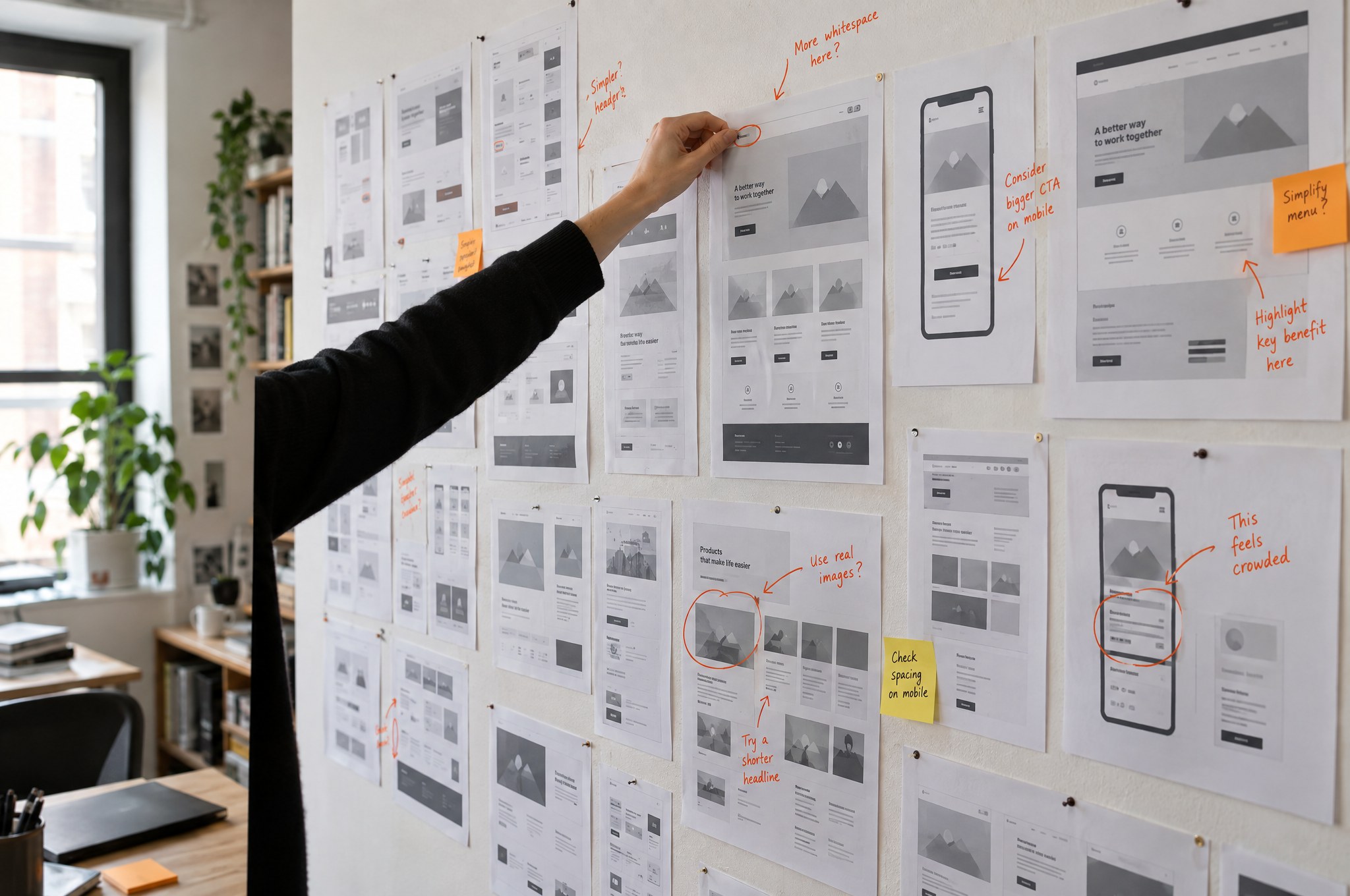
FIVE PAGES, HUNDREDS OF DECISIONS. Behind a short sitemap sit hierarchy, copy, art direction, responsive behaviour, interaction and testing. Visual by Konstant Influence.
Where does the money actually go?
For a custom brand website, a large part of the work happens before development. There is research, sitemap planning, references, creative direction, wireframes and the actual visual design. Then every design needs to work across different screen sizes before being developed, animated, tested and prepared for launch.
The scope grows quickly when you add copywriting, custom photography, 3D, motion design, multilingual content, CMS collections, booking systems, advanced forms, integrations or e-commerce. And there are smaller things that are easy to forget: redirects from an old website, metadata, cookie consent, analytics, domain setup, accessibility and testing.
This is why asking “What does a website cost?” is a little like asking “What does an interior cost?” A room from IKEA and a completely art-directed space both contain a table, chairs and lights. The components alone do not explain the price.
The level of thought, customization and execution does.
Does every business need a €10,000 website?
Definitely not.
A local business that mainly needs its opening hours, services and phone number online may get everything it needs from a relatively simple website. Spending €20,000 just because a larger agency offers more would make little sense.
The investment becomes more interesting when the website plays a meaningful role in how the company wins customers or is perceived. If one new client is worth €10,000, the economics of a €5,000 website look completely different from those of a business where the website merely needs to display a menu.
That is why I would not start with:
“How much should we spend?”
I would start with:
“What job does this website need to do?”

START WITH THE JOB. Before choosing a budget, define what the website must make people understand, feel and do. Visual by Konstant Influence.
Maybe it needs to generate qualified enquiries. Maybe it needs to convince investors. Maybe the company already has great products but looks significantly cheaper online than it actually is. Maybe it needs to explain a complicated service within thirty seconds. Or maybe it simply needs to make an established business finally look established.
The right budget depends heavily on the answer.
Cheap websites can become expensive
There is nothing wrong with choosing the cheaper option when the scope is simple. The problem begins when price is the only criterion.
A cheap website becomes expensive when it needs to be rebuilt a year later because nobody considered mobile properly. When every small content change requires a developer. When the design makes a premium company look generic. When there is no SEO structure and every service lives on the homepage. Or when the company spends thousands on advertising to send people to a website that does not convince them.
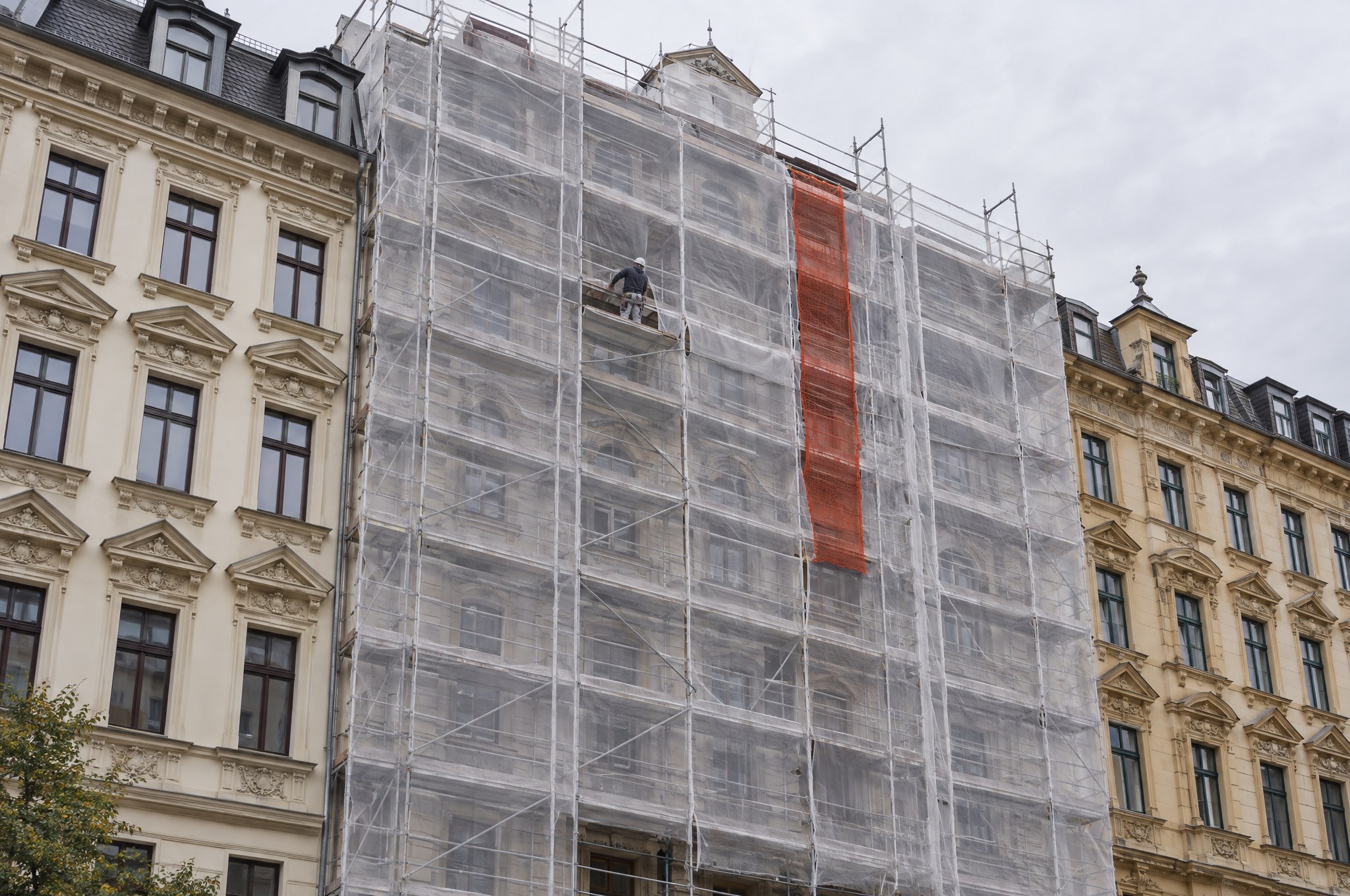
THE REBUILD TAX. A cheap first pass becomes expensive when the structure underneath has to be rebuilt. Visual by Konstant Influence.
At that point, the initial saving was never really a saving.
The opposite is also true: an expensive website is not automatically a good one. A large budget can still produce mediocre design, unnecessary complexity or six weeks of workshops that nobody needed.
Price and value are related, but they are not the same thing.
So, how much should you spend?
Spend enough to solve the actual problem, and understand what is included before comparing prices.
If you only need a professional digital presence, you probably do not need an enormous custom project. If your website is one of the main ways people discover, judge and buy from your business, treating it as a cheap technical necessity becomes much harder to justify.
Because ultimately, you are not really buying a website.
“
The bottom line
You are buying the version of your business that people meet before they ever speak to you.

Written by
Konstantin Nikolaev
Brand & Web Designer
Brand & web designer based in Leipzig and Halle (Saale), and an Official Framer Expert. I build brand identities and websites that work as one system.
WRITTEN FROM
Leipzig, Germany


